

Manual Lathe
-
![Manual Horizontal Lathe]() Manual Horizontal LatheModel C6241/ C6246/ C6251/ C6256 manual lathe is suitable for turning inside and outside cylindrical surface, conical surface and other rotating surface, turning various metric, inch, module and...read more
Manual Horizontal LatheModel C6241/ C6246/ C6251/ C6256 manual lathe is suitable for turning inside and outside cylindrical surface, conical surface and other rotating surface, turning various metric, inch, module and...read more -
![Manual Universal Lathe Machine]() Manual Universal Lathe MachineModel C6241/ C6246/ C6251/ C6256 manual universal lathe machine is suitable for turning inside and outside cylindrical surface, conical surface and other rotating surface, turning various metric,...read more
Manual Universal Lathe MachineModel C6241/ C6246/ C6251/ C6256 manual universal lathe machine is suitable for turning inside and outside cylindrical surface, conical surface and other rotating surface, turning various metric,...read more -
![Manual Metal Lathe]() Manual Metal LatheModel C6266A/ CQ6280 manual lathe is suitable for turning inside and outside cylindrical surface, conical surface and other rotating surface, turning various metric, inch, module and diametral...read more
Manual Metal LatheModel C6266A/ CQ6280 manual lathe is suitable for turning inside and outside cylindrical surface, conical surface and other rotating surface, turning various metric, inch, module and diametral...read more -
![Heavy Duty Lathe]() Heavy Duty LatheModel CW61100B/ CW61125B/ CW61140B/ CW61160B manual heavy duty lathe machine can undertake all turning work, can turn various parts of the end face, outer circle, inner hole of various common...read more
Heavy Duty LatheModel CW61100B/ CW61125B/ CW61140B/ CW61160B manual heavy duty lathe machine can undertake all turning work, can turn various parts of the end face, outer circle, inner hole of various common...read more -
![Big Manual Lathe]() Big Manual LatheModel CW61100B/ CW61125B/ CW61140B/ CW61160B manual lathe machine can undertake all turning work, can turn various parts of the end face, outer circle, inner hole of various common threads -...read more
Big Manual LatheModel CW61100B/ CW61125B/ CW61140B/ CW61160B manual lathe machine can undertake all turning work, can turn various parts of the end face, outer circle, inner hole of various common threads -...read more -
![Heavy Duty Horizontal Lathe]() Heavy Duty Horizontal LatheModel CW6180B/ CW6180D manual lathe machine can undertake all turning work, can turn various parts of the end face, outer circle, inner hole of various common threads - metric, Inch, module and...read more
Heavy Duty Horizontal LatheModel CW6180B/ CW6180D manual lathe machine can undertake all turning work, can turn various parts of the end face, outer circle, inner hole of various common threads - metric, Inch, module and...read more -
![Pipe Thread Lathe]() Pipe Thread LatheModel Q1313/ Q1319/ Q1322/ Q1325/ Q1327/ Q1330/ Q1335/ Q1343/ Q1353 pipe thread lathe is mainly used for machining shaft and disc parts and all kinds of thread processing. Because the spindle hole...read more
Pipe Thread LatheModel Q1313/ Q1319/ Q1322/ Q1325/ Q1327/ Q1330/ Q1335/ Q1343/ Q1353 pipe thread lathe is mainly used for machining shaft and disc parts and all kinds of thread processing. Because the spindle hole...read more -
![Manual Pipe Thread Lathe]() Manual Pipe Thread LatheModel Q1313/ Q1319/ Q1322/ Q1325/ Q1327/ Q1330/ Q1335/ Q1343/ Q1353 pipe thread lathe is mainly used for machining shaft and disc parts and all kinds of thread processing. Because the spindle hole...read more
Manual Pipe Thread LatheModel Q1313/ Q1319/ Q1322/ Q1325/ Q1327/ Q1330/ Q1335/ Q1343/ Q1353 pipe thread lathe is mainly used for machining shaft and disc parts and all kinds of thread processing. Because the spindle hole...read more -
![Spherical Turning Lathe Machine]() Spherical Turning Lathe MachineModel CA6525/ CW6593B/ C65160B spherical turning lathe is specialized spherical lathe designed and manufactured on the basis of high-performance ordinary lathes. It is suitable for processing...read more
Spherical Turning Lathe MachineModel CA6525/ CW6593B/ C65160B spherical turning lathe is specialized spherical lathe designed and manufactured on the basis of high-performance ordinary lathes. It is suitable for processing...read more -
![Ball Turning Lathe]() Ball Turning LatheModel CA6525/ CW6593B/ C65160B spherical turning lathe is specialized spherical lathe designed and manufactured on the basis of high-performance ordinary lathes. It is suitable for processing...read more
Ball Turning LatheModel CA6525/ CW6593B/ C65160B spherical turning lathe is specialized spherical lathe designed and manufactured on the basis of high-performance ordinary lathes. It is suitable for processing...read more -
![Spherical Lathe]() Spherical LatheModel CA6525/ CW6593B/ C65160B spherical turning lathe is specialized spherical lathe designed and manufactured on the basis of high-performance ordinary lathes. It is suitable for processing...read more
Spherical LatheModel CA6525/ CW6593B/ C65160B spherical turning lathe is specialized spherical lathe designed and manufactured on the basis of high-performance ordinary lathes. It is suitable for processing...read more


Our Factory

Dalian Haidi Machinery Co.,Ltd is a professional manufacturer that specializes in the development, research and production of single-column vertical lathe, double-column vertical lathe, horizontal lathe, boring-milling machine, machining center, gear hobbing machine. The researched products by our company have such advantages as a great variety, complete specification, advanced technology and outstanding quality. Haidi Machinery covers building area of 30,000 square meters. Now we have more than 200 staff members, including 11 senior engineers, 8 senior managerial staff, over 160 technical workers. Our factory has strong strength and excellent processing equipment. The machine tools produced by our factory are sold all over the country and the world. The advanced design, reliable trustworthy, simple operation, flexible use, high precision, high cost performance and perfect after-sales service have won the unanimous praise of users. Our company is the largest enterprise that specializes in the casting of machine tool in southern Liaoning.In the meantime, it has offered great support to speed up our company's product research and production and made great contribution to providing products to customers in the shortest duration.


What Is Manual Lathe
Manual Lathe machine is a manually operated cutting tool that rotates work piece to desired shapes in the metal working industry. It has a wide variety of manual lathes including engine, special, and turret Lathes. The machine metal lathe is used for the shaping, cutting, drilling, and turning of cylindrical workpieces, such as screw threads, tapered work, and drilled holes. The conventional lathe is easy to operate, efficient, and productive for multi tasks.
Advantages of Manual Lathe
Superior accuracy
Boring Machining allows for the precise machining of holes in various materials. While typical drilling processes can achieve an accuracy of up to 0.02 inches, boring operations can achieve accuracies of up to 0.0005 inches. That' s an incredible 40 times more precise than standard drilling operations.
Better surface finish
Boring Machining offers improved surface finishes. This process can achieve a surface finish of up to 32 micro inches (Ra value), significantly smoother than many other machining methods.
Versatility
Boring Machining can be used on a wide range of materials, from common metals like steel and aluminum to softer materials like wood and plastic. It’ s not just limited to round holes either with the right tooling, you can get machine slots, grooves, and keyways.
Efficiency
With advanced automated boring machines, production times can be significantly reduced. This efficiency can lead to reduced manufacturing costs and faster production times, which is crucial in high-volume industries.
Why Choose Us
Experienced team
Our staff comprises seasoned professionals with extensive experience in technology development, offering deep expertise in a wide array of tech domains.
Quality assurance
We adhere to stringent quality control processes to deliver reliable and high-performance products that exceed industry standards.
Customization
Our team of experts provides tailored services to address specific challenges, ensuring each solution is unique and perfectly suited to the client's requirements.
After-sales service
Dedicated to strict quality control and thoughtful customer service, our experienced staff members are always available to discuss your requirements and ensure full customer satisfaction.
Leading factory
20+years' production experience as the leading manufacturer for vertical lathe,horizontal lathe, machining center,boring machine,milling Machine, drilling machine, slotting machine, gear hobbing machine, etc.
Exportation to 60+ countries
Our products have exported to Australia, Chile, Peru, Turkey, Russia, Indonesia, Saudi Arabia,USA, Belarus, Argentina Singapore and others, around 60 countries.
What Is Manual Lathe Machine Working Principle
Manual lathe machines are controlled by hand, They perform various operations to give the desired shape and size. the conventional lathes include headstocks, beds, tailstocks, carriage Toolposts, and spindles. The operator manually controls the movement of cutting tools to shape the workpiece. To operate a manual lathe mc, the operator usually clamps the workpiece between the spindle box and the center of the tailstock.
The cutting tool is then brought into contact with the workpiece using the toolpost and carriage. By rotating the handwheels and manually manipulating the cutting tool's position, the desired shape and dimensions can be achieved. The lathe machine operation process includes turning, boring, drilling, threading, and taper turning. All the methods are basic turning operations. A manual lathe operator requires skill and experience to operate effectively. Various tools and orientation of the tool are for a wide desired shape. It is one of the largest suppliers of manual lathes to the metalworking industry.
We provide a complete set of large spindle holes for economical, precision, and heavy-duty manual lathes. The manual lathe mc adopts a full solid cast iron machine base for maximum rigidity and a front pull out chip tray for easy maintenance. These headstock gears are made of alloy steel and hardened precision ground for smooth running. The spindle has 3 points supported by precision bearings. It can ensure long-lasting cutting stability. The spindle box adopts a closed design and is lubricated with oil. The gearbox provides both inch and metric thread capacities.
Examples Of Manual Lathe Applications


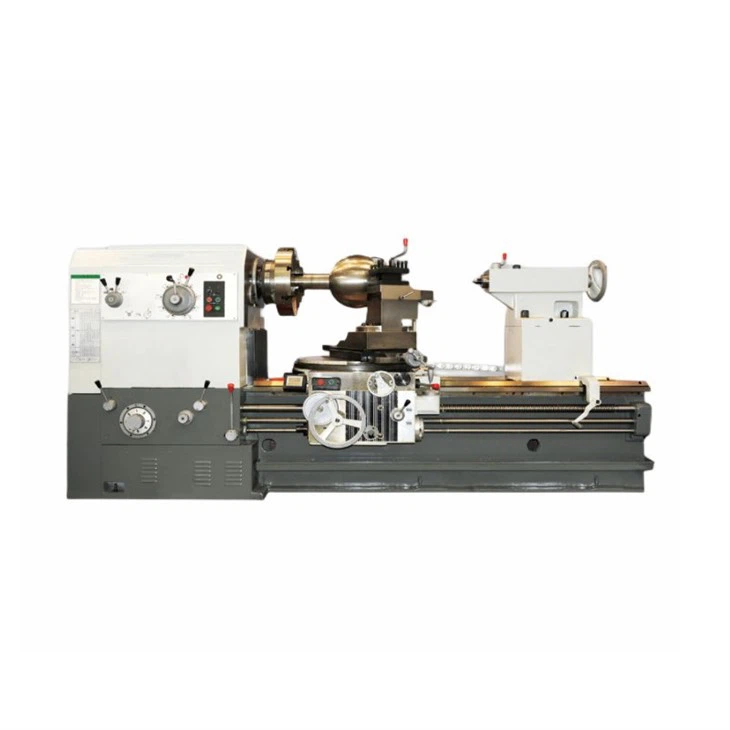
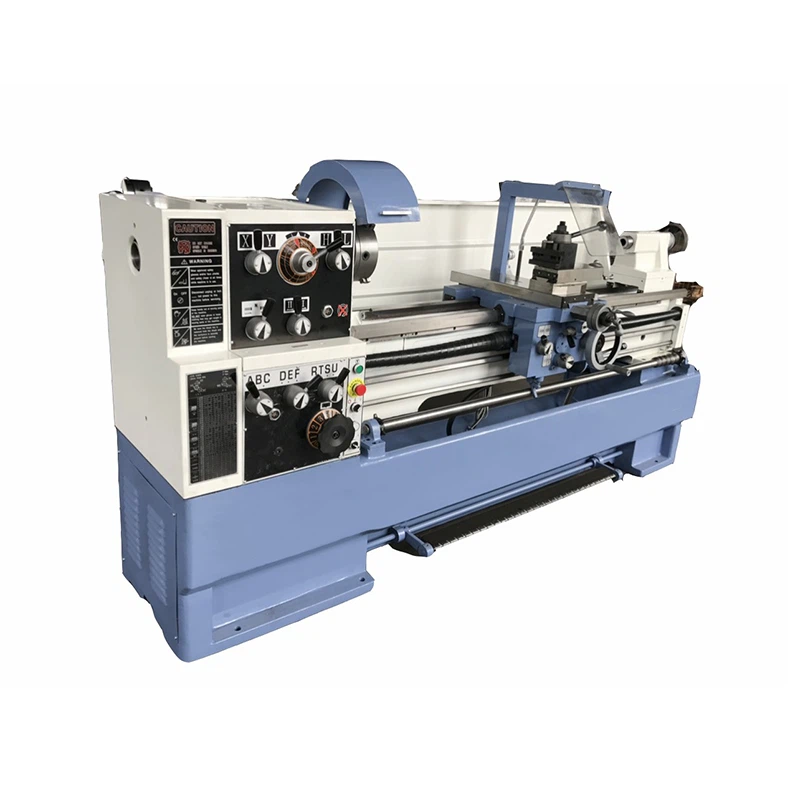
A manual lathe is a machine tool that shapes and machines workpieces through controlled rotation of the piece and the cutting tool. Unlike CNC lathes, which operate through computerized commands, manual lathes are directly operated by an expert turner. Manual lathes are ideal for creating unique and personalized jewelry pieces where craftsmanship and attention to detail are paramount. In restoring old components, like parts of historical machinery, manual lathes are essential to recreate parts that are no longer commercially available. The making of musical instruments, like flutes or trumpets, often involves manual lathes to achieve the necessary precision in critical parts. In the aviation industry, where safety is paramount, manual lathes are used to manufacture high-precision aircraft parts. Luxury watches require precise and custom components. Manual lathes play a crucial role in producing parts for this industry.
Manual lathes, despite the growing presence of CNC technologies, remain a valuable option in manufacturing. Their ability to combine human craftsmanship, versatility, and efficiency makes them an essential tool in many industries. Whether in the production of high-quality unique parts or in the creation of prototypes and initial samples, manual lathes continue to play an important role in modern manufacturing.
While automation and CNC technology have their place, it’s crucial to recognize the advantages that manual lathes bring to production and how they can complement manufacturing operations. By combining expert skills with traditional tools, exceptional results can be achieved in terms of quality and precision. Ultimately, the decision to use manual or CNC lathes will depend on the specific needs of each project and the value placed on craftsmanship and human skill in the manufacturing process. Manual lathes are more energy-efficient as they don’t require the constant electrical power that CNC machines do. This can lead to significant savings over time.
The Difference Between Manual Lathe and CNC Lathes
The feed system of the manual lathe includes a feed box and a slide box. It is used for turning the surface of the workpiece by the lead screw and the smooth bar; the CNC lathe has a numerical control system,feed and hydraulic systems, etc. The thread processing of the workpiece surface is carried out in the turning center. Manual lathes need to be manually operated to light the workpiece, and workers must manually shake the tools to process the parts in strict accordance with the lathe use regulations.
CNC lathes directlyprocess product parts in accordance with the prescribed instructions issued by technicians through data control. Because manual lathes are more flexible in manual operation, the equipment is subject to large forces, and it is not easy to process complex parts, and it is more convenient to process single products. CNC lathes with the same large equipment are less stressed, and each part is more precise, suitable for more complex processing. And the production of high-volume mechanical parts.
The cost of manual lathes is low the investment is small, and debugging can be done manually before use. The maintenance of ordinary lathes is mainly due to the wear between components, and the maintenance cost is not high. Manual lathes must strictly control the ambient temperature, humidity, power supply voltage and other conditions. CNC lathes level the position on the basis of avoiding direct sunlight and humid airflow as muchas possible.
How to Control the Quality of Manual Lathe
A manual lathe machine is a versatile and indispensable tool in machining. It consists of a rotating spindle that holds the workpiece and a cutting tool that removes material to create a desired shape. Unlike their computer-controlled counterparts, manual lathes are operated by hand, requiring the machinist’s skill and experience to achieve precision. The first step in mastering precision on a manual lathe machine is selecting the right material. Different materials have different properties, which can affect the ease of machining and the quality of the final product. Understanding the characteristics of materials such as steel, aluminum, brass, and plastics is crucial. Each material may require different cutting speeds, feed rates, and tooling choices. Proper workholding is essential for precision machining.
The workpiece must be securely clamped in the lathe’s chuck or collet to prevent movement during machining. Additionally, aligning the workpiece correctly with the lathe’s axis is crucial to ensure concentricity and precision. Choosing the right cutting tool is another critical aspect of precision machining. Different tools are designed for specific tasks, such as roughing, finishing, or threading. Regular maintenance of cutting tools, including sharpening or replacing them when necessary, is essential to achieve consistent results. Achieving precision in manual lathe work requires precise measurements. Machinists use a variety of measuring tools, including calipers, micrometers, and dial indicators, to ensure that dimensions are accurate to within thousandths of an inch. Consistent measurement and verification throughout the machining process are crucial for meeting tight tolerances.
Precision machining on a manual lathe involves various techniques, including facing, turning, boring, threading, and knurling. Each operation requires a unique approach and skill set. It’s essential to practice and develop these skills to achieve the desired level of precision in your work.The final step in mastering precision on a manual lathe machine is finishing. This includes removing any tool marks, burrs, or imperfections from the workpiece’s surface. Aesthetics and functionality play a role here, as a well-finished part not only looks better but also functions better. Quality control checks, such as final measurements and inspections, ensure that the workpiece meets the required specifications.
Introduction to the Basic Knowledge of Manual Lathes


A manual lathe or otherwise known as a conventional lathe is mainly operated manually by an operator. It consists of a horizontal base or bed and the workpiece such as wood or metal is mounted there. The workpiece then gets rotated with cutting tools to shape the piece into a desirable form. Based on the operator’s skill, it allows flexibility when it comes to precision turning, drilling, threading, and grooving operations.
Many operators prefer this flexibility, and you can find these lathe machines useful for smaller-scale and specialized projects. In a manual lathe, the operator has direct control over all operations. They can adjust the rotation speed, cutting depth, and other variables precisely. This accuracy is essential for producing high-quality parts. The skill and experience of the turner are fundamental in manual lathes. It must be able to interpret blueprints, adjust tools in real-time, and make informed decisions to achieve the desired outcome. Manual lathes are ideal for customized jobs and unique pieces. The operator can quickly adapt the machine to produce specific custom pieces.
Manual machines are controlled by hand, including any traditional machines such as bandsaws, drill presses, grinders, endmills, and lathes. With these manual machines, machinists can create a vast number of prototyping items for various purposes. However, compared with CNC machining that’s controlled by automation or a computer, manual machining takes more time and more attention to perform any function. Conventional lathes typically consist of a horizontal bed, a headstock at one end, and a tailstock at the other. The workpiece is clamped between the headstock and tailstock, allowing it to rotate about its axis.
The cutting tool, held in a tool post, is then brought into contact with the rotating workpiece to remove material and shape it. These lathes can handle various operations, including facing, turning, drilling, boring, threading, and taper turning. They are commonly used for manufacturing components such as shafts, bushings, pulleys, and other cylindrical parts. The versatility and precision of conventional lathes make them suitable for both small-scale workshops and large industrial settings.
How to Operate a Manual Lathe
A Manual lathe is a machine tool primarily used for shaping pieces of metal and sometimes wood or other materials. Manual lathes operate by spinning the block of material to perform various tasks such as cutting, sanding, or drilling with tools that are applied to the work piece. Operating a manual Manual lathe can be a difficult undertaking. By paying close attention to the steps you need to successfully cut material, you can continuously create accurate parts.Turn the machine on and warm it up. It is crucial to warm up a machine that has not been in use overnight. This process will distribute the oil and lubricate the numerous moving parts.
Set the RPMs to about 1,000 and start the spindle. You can start even slower and slowly raise the RPMs to 1,000 during the first few minutes. Set the jaws for the job. Remove the old jaws by loosening them with wrenches and sliding them out and replacing with the correct sized jaws for the job.
Depending on the size of the raw material, you may need smaller or bigger jaws. Make sure they are tightened properly and in concentrically. Run the jaws to see if they are properly installed. Set the tool for the job. You can place a tool block with a tool holder in the tool post. This will cut the outer dimensions of the part. Alternately, you can place a boring bar or drill in the tails stock for drilling holes or boring inner dimension.
Place the raw material in the chuck jaws and tighten with the chuck key. This will hold the material in place while you are cutting. Set the RPMs according to the material used as well as the insert or drill used. Harder tooling can work with faster RPMs and feed into the part.Start the cycle and bring the tool close before starting the spindle.
Reset all your measuring devices to zero, whether on the ways for the tail post or the measuring wheel on the tail stock. By resetting these measuring devices for your tooling, you can cut multiple pieces to the same dimensions every time. This reset sets a starting point reference for running more than one piece in a production run to maintain accuracy. Clean the Manual lathe with compressed air after every cycle to prevent metal chip buildup. Metal chips can get caught in the jaws and cause cut dimensions to be inaccurate. A clean machine prolongs the its life and assures parts are cut to exact specifications.
Certificate


FAQ
As one of the leading manual lathe manufacturers and suppliers in China, we warmly welcome you to buy cheap manual lathe made in China here from our factory. All our products are with high quality and low price.
cnc milling machine, portable milling machine, plate vertical lathe