

Vertical Machining Center
-
![CNC Vertical Machining Center]() CNC Vertical Machining CenterModel XH7126/ XH7136/ XH7145/ VMC850/ VMC1160/ VMC1370/ VMC1580 cnc vertical machining center can realize various complex parts such as disks, plates, shells, cams, molds, etc. One-time clamping,...read more
CNC Vertical Machining CenterModel XH7126/ XH7136/ XH7145/ VMC850/ VMC1160/ VMC1370/ VMC1580 cnc vertical machining center can realize various complex parts such as disks, plates, shells, cams, molds, etc. One-time clamping,...read more -
![High Performance Vertical Machining Center VMC1580 CNC Milling Machine]() High Performance Vertical Machining Center VMC1580 CNC Mi...The VMC1580 CNC Vertical Machining Center is a high-performance, precision-engineered machine designed for diverse industrial applications. With a generous 1500x800mm working area, this...read more
High Performance Vertical Machining Center VMC1580 CNC Mi...The VMC1580 CNC Vertical Machining Center is a high-performance, precision-engineered machine designed for diverse industrial applications. With a generous 1500x800mm working area, this...read more -
![CNC Vertical Machine Center]() CNC Vertical Machine CenterModel XH7126/ XH7136/ XH7145/ VMC850/ VMC1160/ VMC1370/ VMC1580 cnc vertical machining center can realize various complex parts such as disks, plates, shells, cams, molds, etc. One-time clamping,...read more
CNC Vertical Machine CenterModel XH7126/ XH7136/ XH7145/ VMC850/ VMC1160/ VMC1370/ VMC1580 cnc vertical machining center can realize various complex parts such as disks, plates, shells, cams, molds, etc. One-time clamping,...read more -
![Vertical Machine Center]() Vertical Machine CenterModel XH7126/ XH7136/ XH7145/ VMC850/ VMC1160/ VMC1370/ VMC1580 cnc vertical machining center can realize various complex parts such as disks, plates, shells, cams, molds, etc. One-time clamping,...read more
Vertical Machine CenterModel XH7126/ XH7136/ XH7145/ VMC850/ VMC1160/ VMC1370/ VMC1580 cnc vertical machining center can realize various complex parts such as disks, plates, shells, cams, molds, etc. One-time clamping,...read more


Our Factory
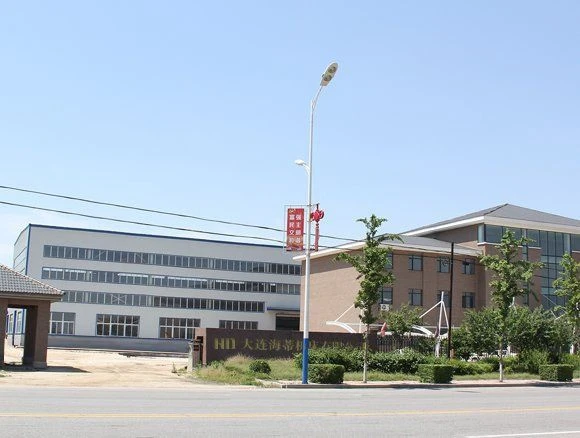
Dalian Haidi Machinery Co.,Ltd is a professional manufacturer that specializes in the development, research and production of single-column vertical lathe, double-column vertical lathe, horizontal lathe, boring-milling machine, machining center, gear hobbing machine. The researched products by our company have such advantages as a great variety, complete specification, advanced technology and outstanding quality. Haidi Machinery covers building area of 30,000 square meters. Now we have more than 200 staff members, including 11 senior engineers, 8 senior managerial staff, over 160 technical workers. Our factory has strong strength and excellent processing equipment. The machine tools produced by our factory are sold all over the country and the world. The advanced design, reliable trustworthy, simple operation, flexible use, high precision, high cost performance and perfect after-sales service have won the unanimous praise of users. Our company is the largest enterprise that specializes in the casting of machine tool in southern Liaoning.In the meantime, it has offered great support to speed up our company's product research and production and made great contribution to providing products to customers in the shortest duration.


What Is Vertical Machining Center
Vertical machining technology is one of the most productive tools in the CNC machine shop. It has various tools in the changer and other options that enhance and customize productivity. Vertical machining centers are flexible multi-functional tools that help machine holes and other properties in components with a flat surface. It operates in a vertical direction using a spindle that works at a steep angle. You can refer to the vertical machine center as an industrial workhorse because it can deliver parts with exceptional accuracy and shorter lead times. Its components have robust designs to deliver superior torque, horsepower, and machining speed. The level of automation of vertical milling centers also allows them to cut various materials and reduce overall manufacturing costs.
Advantages of Vertical Machining Center
Simple operation
Vertical machining centers are typically easy to use and very user-friendly. As this type of machining center is so popular, finding skilled workers with experience working with these tools is usually very easy.
Precision and accuracy
These machine tools offer excellent precision. A vertical machining center can create highly accurate cuts to exact specifications. One of the greatest benefits of these machining centers is how they minimize the risk of human error.
Space
An advantage to having a vertical machining center is that it takes up very little space compared to horizontal machining centers.
Visibility
The design and setup of a vertical machining center allow for great visibility while a project is in action.While these machines are already highly precise, this open view can assist in even greater attention to detail.
Why Choose Us
Experienced team
Our staff comprises seasoned professionals with extensive experience in technology development, offering deep expertise in a wide array of tech domains.
Quality assurance
We adhere to stringent quality control processes to deliver reliable and high-performance products that exceed industry standards.
Customization
Our team of experts provides tailored services to address specific challenges, ensuring each solution is unique and perfectly suited to the client's requirements.
After-sales service
Dedicated to strict quality control and thoughtful customer service, our experienced staff members are always available to discuss your requirements and ensure full customer satisfaction.
Leading factory
20+years' production experience as the leading manufacturer for vertical lathe,horizontal lathe, machining center,boring machine,milling Machine, drilling machine, slotting machine, gear hobbing machine, etc.
Exportation to 60+ countries
Our products have exported to Australia, Chile, Peru, Turkey, Russia, Indonesia, Saudi Arabia,USA, Belarus, Argentina Singapore and others, around 60 countries.

The vertical machining centers operate on the design model of components. The numerous machine tools and the parameters needed for the parts are transformed into information codes that are generally acceptable and readable by the numerical control device of the machine. The processing program helps to process the component’ s CNC program automatically.
These instruction codes are usually stored on information carriers like disks or punctured tapes while these carriers are sent to the input device. You can read this information and transfer it to the numerical control device. Also, you can use the computer and the machining center to send information directly to achieve the input and output of the component’ s program. The vertical machining center generally has three linear motion coordinates. There is also a horizontal axis rotary table attached to its worktable. This helps it to fabricate circular workpieces easily.
Components Of A Vertical Machining Center
The vertical machining center comprises many important components. These components combine to fabricate parts according to manufacturing standards. The milling spindle is usually perpendicular/vertical to the working table. It is a rotating shaft with a unit for holding a tool or workpiece.
Generally, the spindle shaft acts as a positioned, support, and rotary drive for workpieces. The table is flat on which to put the workpiece directly or using several fixtures such as hard clamping vises or milled aluminum parts. The table has an X-axis which includes the left and right motion, while the Y-axis has a motion to the front and back. These axes and the Z-axis allow you to add unlimited features to workpieces across the planes of motion. The tool changer increases the productivity of the vertical machine center by allowing the automatic selection of tools for different tasks ranging from rough cutting to fine-hole boring.
Adding extra axes to the vertical mills can significantly enhance productivity by changing a simple 3-axis milling machine into a 4-axis or 5-axis machine capable of producing complex components with different surfaces like turbine blades. Most vertical milling centers use recalculating coolant systems to ensure parts and cutter tools are well lubricated. This coolant system often utilizes water and soluble oil amongst various liquids. These covers help to reduce the splatters caused by the milling operations. Likewise, it safeguards the machinists and the environment from the machining operation. Shuttle tables or other automated part-loading systems help to increase the productivity of the vertical machining center while reducing downtime. Chip conveyors or augers can help move chips from the work area to facilitate productivity and eliminate downtime from manually shoveling waste chips.
Applications And Uses Of Vertical Machining Centers
Vertical machining centers can machine several parts and products for different industries and uses. Sectors like aerospace, manufacturing industry, machinery builders, and medical utilize this CNC machining technology due to its high accuracy, high precision, and volume production applications. Structures like a basket or a base have irregular shapes. Most of these machined parts require multi-point mixed processing of point, line, and face. Vertical milling centers with automatic machining capability allow you to machine these complex components that are often difficult to create using traditional techniques.
Box-type CNC parts are those with a one-hole system and several cavities within. These box-type parts are common in cars and airplanes. Engine block, spindle box, gear pump shell, diesel engine block. Using a vertical machining center, you can execute the operation of standard machine tools in a one-time clamping. Furthermore, the vertical centers have high accuracy, efficiency, rigidity, and automatic tool changer. Provided the process sequence is well programmed and you utilize proper fixtures and tools, the difficult problems of box-type parts machining can be resolved.
Components like propellers, cams, and impellers with complex curves are standard in aviation and transportation. Traditional machine tools make these components with curved parts, surface contour, and box/casting with closed inner cavities challenging to create with the desired machining accuracy. However, multi-axis vertical machine centers integrated with CNC machine technology help to produce curved parts with the highest precision and accuracy efficiently and in a shorter period.
Vertical machining center offers high flexibility and adaptability. When you change the machined object, you can build and input new programs, change some program segments, or utilize specific special instructions. For instance, you can use the zoom feature to produce parts with the same shape but different sizes. It offers excellent convenience for small batch production, new product trial, or multi-variety production. Also, it reduces the production preparation and trial manufacturing cycle.
Differences Between Vertical Machining Center And Horizontal Machining Centers
Vertical machining centers are sophisticated machine tools with integrated automation, compound machining, versatility, and high speed. Horizontal and vertical machining centers are the standard CNC milling machines. Both machines possess varying orientations that allow you to enjoy the depth that horizontal machining centers offer or the precision that vertical machining brings to the table. This is a primary difference between these two machines. The orientation or structure of the spindle determines how the cutter interacts/relate with the workpiece.
The geometry of a tool often influences the cutting specifications and results. The horizontal machining centers are shorter and thicker, which means they have the stability needed to sustain resistance while machining deeper cuts. On the other hand, vertical machining is more precise and ideal for smaller workpieces.
The horizontal centers perform better than vertical centers when considering their removal rates. They have very high stability and can produce deeper cuts. Generally, vertical machines are commonly used for limited operations like grooving and facing. But they can be very precise with the cuts and a finishing surface. So, this limited cutting ability results in a lower removal rate. Vertical machining centers, especially 5-axis mills, are better suited for working on multiple sides of workpieces. They often come with integrated pallets with fixtures or tombstones attached. Spindle utilization in vertical machining centers is also greatly improved.
As a result, accessing the front and sides of workpieces is easier. This improves productivity and reduces human error. Vertical machines, on the other hand, cost less than horizontal machines. Likewise, the operations and maintenance of the vertical turning and milling centers are much simpler compared to horizontal machines. As a result, it makes them suitable for all small-scale productions.
There are times when a vertical machining center is preferable to a horizontal machining center. Shops often utilize VMCs for flatwork requiring tool access overtop of the workpiece or production that requires extreme accuracy and high precision. Its tight tolerance leaves very little room for human error and improves production processing. Various industries, from the medical field to the military, utilize VMCs. Some of the most common applications of VMCs include producing parts with the following characteristics.
Vertical machining centers can efficiently produce complex curved parts better than other milling equipment that does not have the precision to meet highly specific requirements. Traditional milling techniques make it challenging to achieve unusual shapes for parts, such as a base or bracket. VMCs can drill holes and notches into workpieces to create parts such as fasteners for the construction industry and piston rods for the automotive industry.

Choosing the Right Vertical Machining Center
Vertical machining center are extremely versatile tools that serve many different functions. It’s important to find the right fit for your shop’s unique needs. It is important to think about the spindle orientation when deciding which type of machining center to choose. As a general rule of thumb, applications that require extreme precision and attention to detail typically require a vertical machining center. In contrast, a horizontal machining center is best for lengthy or large-scale productions. Before landing on the right machining center for your shop, consider your budget. Typically, vertical vertical machining center cost less than their horizontal counterparts. Horizontal vertical machining center are more complex and come with a higher price point and increased productivity. Vertical vertical machining center also take up less space in comparison to horizontal vertical machining center. When picking your machining center, account for table size and travel. Your table’s size should be slightly larger than the area you need for your application. Table travel, also called axis travel, refers to the maximum milling area your spindle can reach. You’ll need to assess spindle-table distance as well to find the right specifications for your needs.
Next, consider how many axes your application will require. Most vertical machining center have three axes, a vertical one that allows you to adjust the height of the spindle and two horizontal ones to move the table in longitudinal and transverse directions. Some applications will need four or five axes, depending on the machine angles you need to reach. When choosing between horizontal and vertical vertical machining center, consider the machining center’s capacities and your application’s needs.
Spindle speed is important because it affects surface roughness. Using the right speed will help maintain your tools and improve the surface finish. Some manufacturers like having a display that tells them the distance they’ve adjusted the table for easier operation. CNC machines can be programmed to complete a wider variety of tasks with greater accuracy, efficiency and safety.
Vertical Machining Center Features for Improving Productivity
Metal cutting capability of vertical machining center could help cutting wide variety of materials. Cutting ability would be the main key for improving the productivity. Therefore, spindle is one of the most important features to evaluate on any vertical machining center. A typical vertical machining center is required to produce a variety of parts, perform quick part change-overs, and check tool quality frequently. However, not all vertical machining centers are designed with these considerations in mind ,it would cause frequent downtime that can quickly add up to higher parts costs, extended delivery times, and most especially it loses a significant amount of profit. That is the reason why manufacturers are seeking some solutions to avoid these kinds of issues that a vertical machine center offers a good amount of cooling capacity.
The control software can facilitate or limit the flexibility of data storage, coordinate systems, probing, and networking of the machine. If the interface is not user friendly, the operators will spend more time to solve the problem. Needless complexities waste the time of the operators and the uptime of the machine. Automation integration makes different versions of automation hardware and software work together. It combines several subsystems to work together as one large system. The automation Integration reduces the need of manpower, and also increases the productivity. The control software can facilitate or limit the flexibility of data storage, coordinate systems, probing, and networking of the machine.
Certificate


FAQ
As one of the leading vertical machining center manufacturers and suppliers in China, we warmly welcome you to buy cheap vertical machining center made in China here from our factory. All our products are with high quality and low price.
second hand milling machine, refurbished milling machine, brass vertical lathe